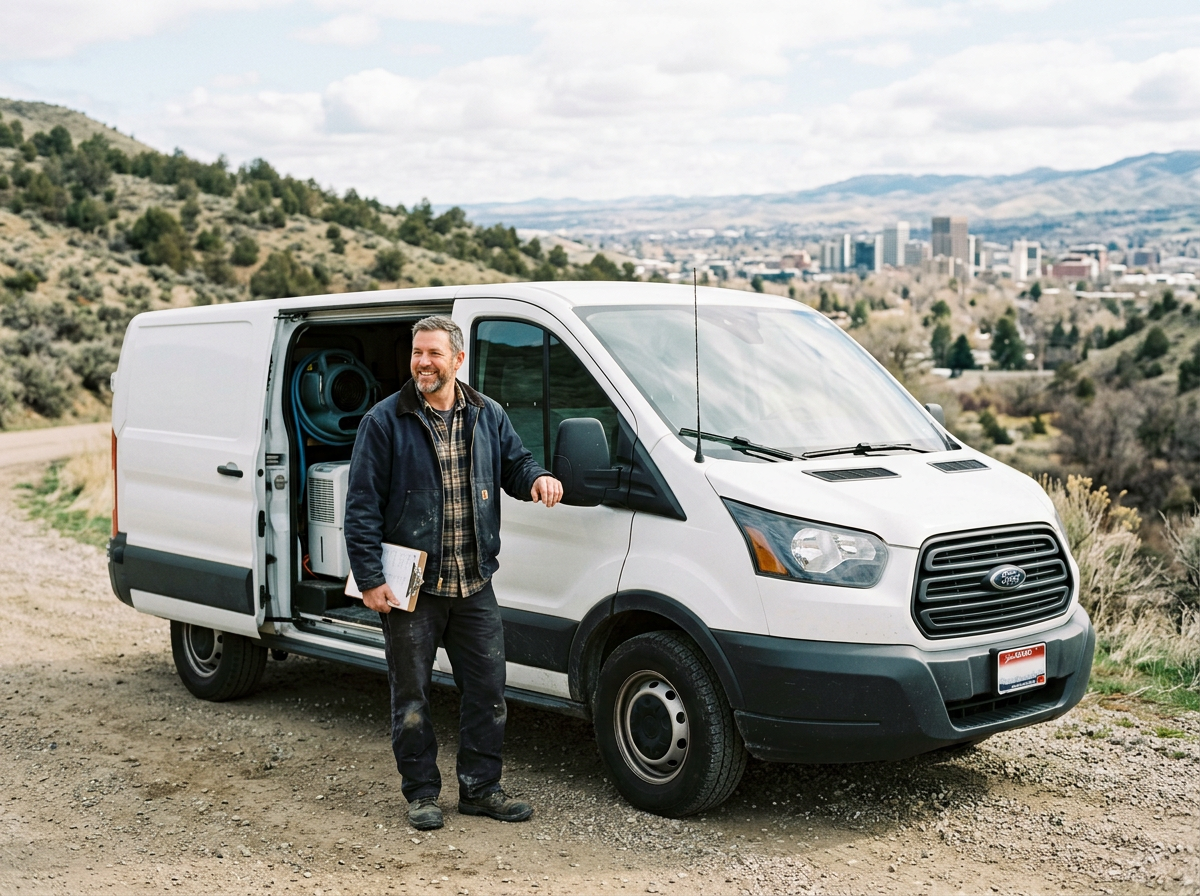
Lowman sits in the Boise National Forest at 3,800 feet where winter lows routinely hit single digits and pipes in empty vacation cabins can burst and run for weeks before anyone notices. Seasonal homes here are mostly older log or frame structures on sloped lots served by wells and septic, not pressurized irrigation systems. Restoration crews must account for frozen ground, narrow driveways, and the two-hour haul from Boise when staging equipment and drying materials.
Unlike tract homes in Meridian or Kuna, Lowman properties rarely have crawl spaces or slabs at grade; many are built on piers or partial basements that collect meltwater from the South Fork Payette River drainage. Technicians focus on hidden leaks behind log walls, ice-damaged supply lines, and mold that starts fast once heat is restored in spring. Response planning always includes extra fuel, chains, and backup pumps because Highway 21 can close without warning.
Around Lowman
We regularly work near:
- 📍South Fork Payette River
- 📍Lowman Hot Springs
- 📍Lowman Ranger Station
- 📍Idaho Highway 21
- 📍Lowman Picnic Area
Water Damage Restoration in Lowman — Local Notes
- •Seasonal cabins often remain unheated from October through May, allowing small leaks to saturate logs and insulation for months.
- •Steep gravel drives and snow load require tracked equipment and four-wheel-drive extraction plans before any drying begins.
- •Well systems mean no municipal shutoff; crews must locate and close individual pressure tanks and lines on site.
- •Hard freezes along Highway 21 frequently add two to four hours to equipment transport from the Boise shop.