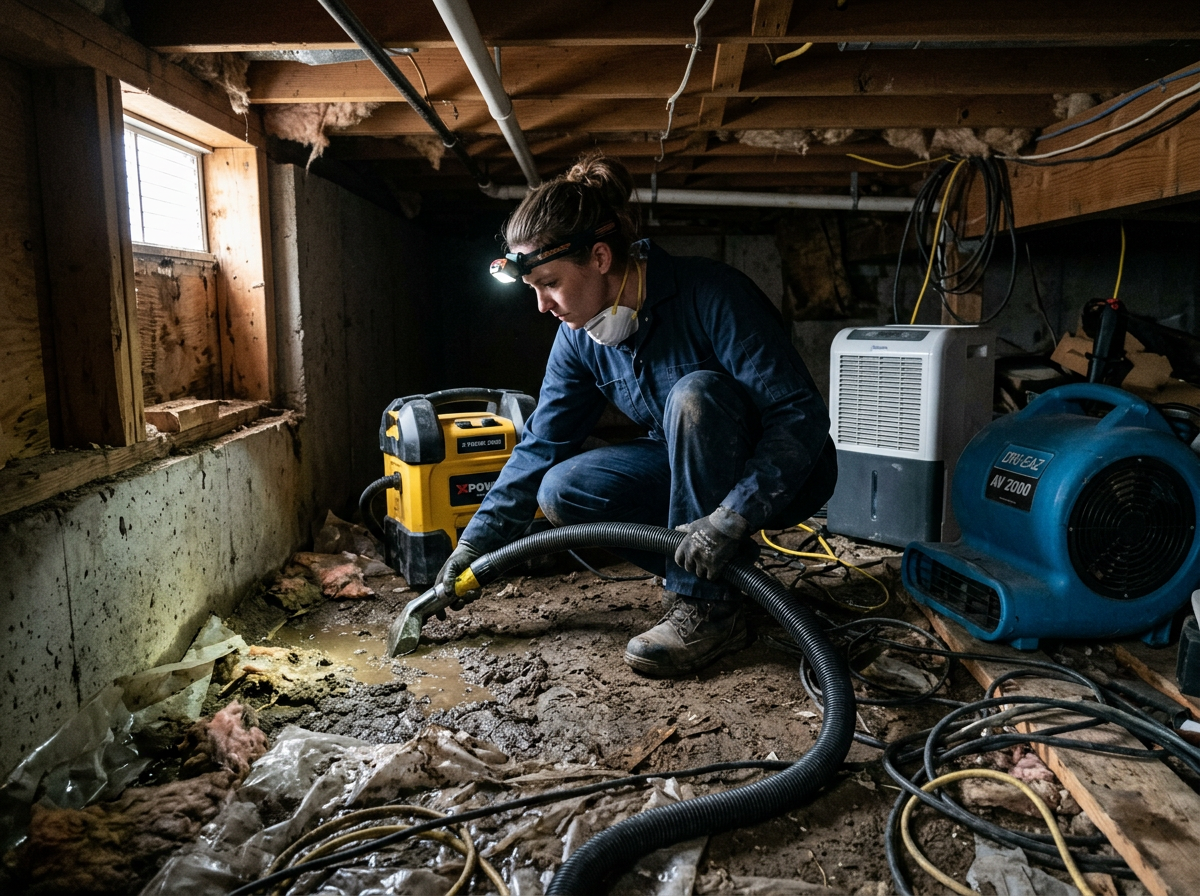
Treasure Valley crawl spaces see three main water categories. Category 1 clean water from a pressurized irrigation break requires rapid removal before it mixes with soil. Category 2 gray water from appliance leaks or septic issues needs containment and disposal at approved sites. Category 3 black water from flooding or sewage demands full PPE, antimicrobial treatment, and often removal of affected soil and insulation. Each category changes the sequence and disposal steps once water sits on the vapour barrier and begins wicking into joists.
Extraction starts with pumps to remove standing water, followed by truck-mounted or portable extraction wands that pull water from under the vapour barrier and saturated insulation. Technicians then use air movers and dehumidifiers sized for the enclosed space while monitoring with pin and pinless meters. Drying targets are wood moisture content below 16 percent and relative humidity under 50 percent inside the crawl space; Boise’s low ambient humidity helps surface drying but hides moisture still trapped in subfloor from below.
Fiberglass batt insulation must usually be removed once it holds more than a few pounds of water. Vapour barriers can often be cleaned and reused if they remain intact, but torn or heavily soiled liners are replaced. Joists and subfloor are salvageable if moisture readings return to normal within 48 hours; any visible mould growth or readings above 20 percent after drying require targeted removal. Safety steps include checking for electrical wiring in standing water and ventilating fumes from equipment.
Claims documentation includes pre- and post-extraction moisture logs, photos of water on the vapour barrier, material disposal receipts, and a drying timeline. Insurance carriers want clear separation between irrigation water and potable sources plus proof that mould was addressed inside the 24-to-48-hour window common in enclosed Boise crawl spaces.
Technician insight
In Boise the thing that catches most people out with Crawl Space Water Extraction is how the semi-arid air dries the top of the vapour barrier in a day while the joists and subfloor above stay wet enough to start mould in 48 hours, especially after an April-to-October irrigation break in the shallow back-lot lines that run through most post-1993 subdivisions.
Meridian Irrigation Break
A pressurized line under a back easement ruptured and sent water across the vapour barrier of a 2015 tract home. Extraction removed several hundred gallons; insulation was pulled from the wettest joist bays and drying equipment ran for four days until readings dropped below 15 percent. The homeowner received a full moisture log for the insurance claim and the floor remained solid.
Crawl Space Water Extraction Services We Offer
✓Irrigation Line Break Extraction
Rapid pumping and vacuum extraction after NMID or private pressurized irrigation lines fail in back-lot easements common across Meridian and Boise subdivisions.
✓Seasonal Water Table Removal
Extraction of groundwater that pushes up through soil in April-to-October when the shallow Treasure Valley aquifer rises under homes in Kuna, Star, and Middleton.
✓Winter Freeze Pipe Extraction
Removal of water from burst supply lines in unheated crawl spaces after thaw, typical in North End bungalows and mountain properties near McCall.
✓Vapour Barrier and Insulation Extraction
Pulling saturated insulation and compromised liners so joists and subfloor can dry before mould colonies form in the enclosed space.
✓Agricultural Well and Septic Extraction
Handling larger volumes on well-and-septic parcels around Parma, Melba, and Wilder where water can enter crawl spaces from irrigation or system failures.
Crawl Space Water Extraction Cost in Boise, ID
| Service | Typical Range | What Affects It |
|---|---|---|
| Small crawl space extraction | $650–$1,200 | Limited access, low volume, no insulation removal |
| Standard subdivision crawl space | $1,100–$2,400 | Typical Meridian or Boise tract home with irrigation break |
| Large or difficult access job | $2,200–$4,000 | Tight North End bungalow or rural property with heavy saturation |
| Additional insulation removal | $400–$900 | Per 500 sq ft when batts must be cut out and disposed |
Ranges are typical for Boise, ID and confirmed with an exact written quote before any work starts.
How it works
- 1
On-Site Assessment
Technicians enter the crawl space to identify water source, measure standing depth, and record moisture levels in soil, insulation, and framing.
- 2
Water Extraction
Pumps and extraction wands remove free water from the vapour barrier and under insulation while containing runoff for proper disposal.
- 3
Drying And Monitoring
Equipment is placed and moisture is tracked daily until wood and soil reach acceptable levels for the Boise climate.
- 4
Documentation And Handover
Logs, photos, and disposal records are compiled for insurance and the homeowner receives guidance on re-entry and follow-up checks.
Pricing
Cost depends on access difficulty, water volume, and whether insulation removal is needed; most Treasure Valley crawl space jobs fall in the mid-hundreds to low-thousands range.