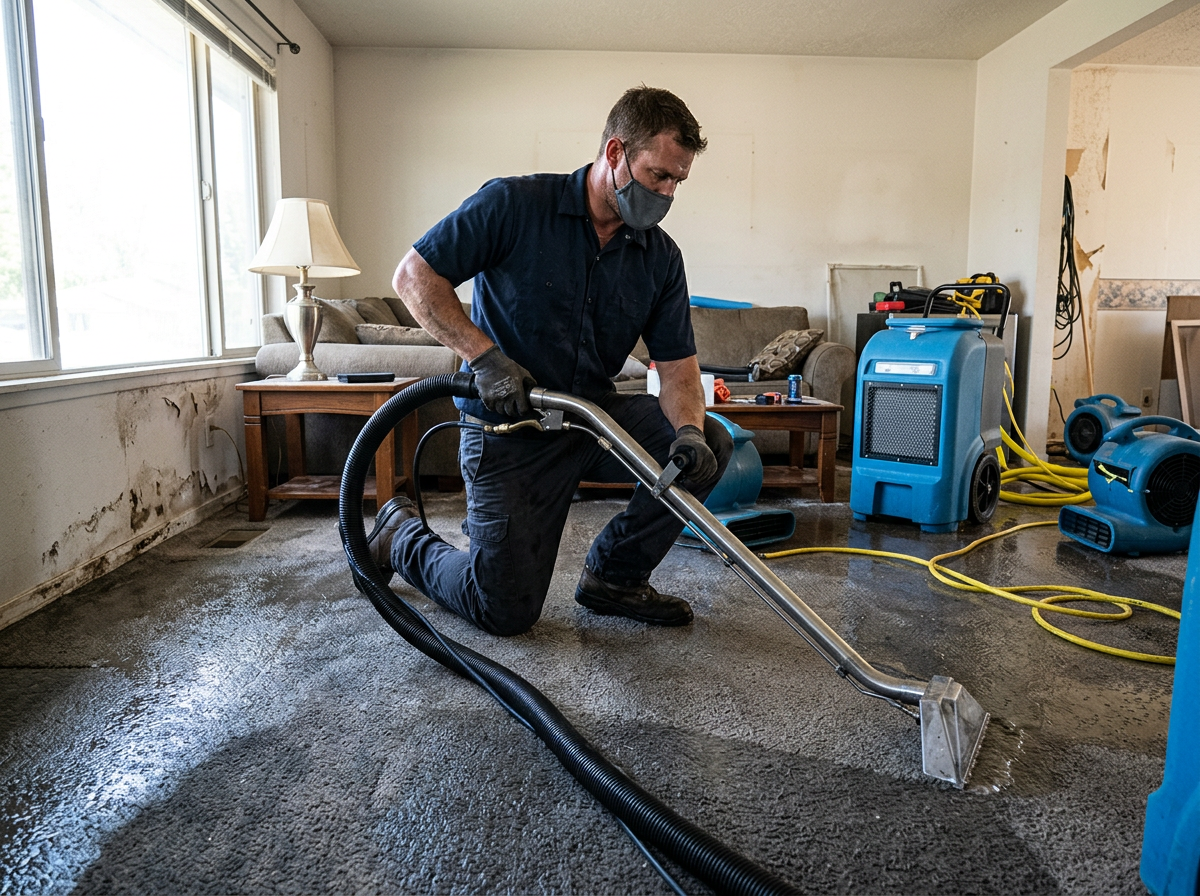
Water extraction begins with classifying the water into categories that dictate every following step. Category 1 clean water from a broken pressurized irrigation line still requires full removal because it quickly mixes with soil and becomes contaminated once it sits on the vapour barrier. Category 2 gray water from appliance leaks or Category 3 black water from septic or flooding demands containment, PPE, and often disposal of saturated materials rather than simple drying. In Treasure Valley crawl spaces the source is frequently an NMID or similar district line that can release hundreds of gallons before the break is noticed, saturating insulation and joists from below.
Extraction follows a strict sequence using truck-mounted pumps for bulk removal, then submersible pumps and wet vacuums to pull water from the gravel and soil beneath the vapour barrier. Technicians lift or cut sections of the barrier to reach trapped water, then deploy air movers and dehumidifiers sized for the enclosed space. Moisture meters and infrared cameras track hidden pockets in rim joists and subfloor; drying targets are 10-12 percent moisture content in framing before any reconstruction begins. Because Boise air is dry, surfaces can test dry while deeper wood remains wet, allowing mould to start inside 24-48 hours if extraction stops too soon.
Salvage decisions hinge on material and exposure length. Solid wood joists and plywood subfloor can usually be dried and retained if extraction occurs before mould colonies form. Fiberglass batt insulation, particleboard, and carpet pad almost always require removal once saturated. Safety protocols include checking for electrical hazards in standing water, ventilating to prevent airborne contaminants, and documenting every step with photos, meter readings, and a written scope for insurance adjusters. Winter freezes in unheated crawl spaces around North End bungalows and newer Meridian tracts often produce damage that only appears after thaw, requiring the same extraction sequence.
Homeowners receive a full packet that includes source identification, pre- and post-extraction moisture logs, material disposal records, and equipment runtime sheets. This documentation matches what carriers expect for claims involving irrigation district lines or seasonal water table intrusion common from April through October.
Technician insight
In Boise the thing that catches most people out with Water Extraction is how fast the low-humidity air makes the vapour barrier feel dry while the joists above it stay wet; irrigation breaks in Meridian tracts often look finished until we lift the plastic and find saturated soil still feeding moisture upward.
Meridian Irrigation Line Break
A pressurized NMID line failed behind a 2018 tract home, sending water under the vapour barrier across the entire crawl space. We pumped several hundred gallons, removed saturated batts, and ran drying equipment for four days until joist readings dropped below 12 percent. The homeowners avoided mould and the claim closed with the documentation packet we supplied.
Water Extraction Services We Offer
✓Crawl Space Water Extraction
Removes standing water and saturated soil moisture from under-home crawl spaces after irrigation line breaks or water table rise.
✓Irrigation Line Break Extraction
Targets high-volume releases from pressurized urban irrigation systems that flood back-lot easements in Meridian, Kuna, and Star.
✓Frozen Pipe Thaw Extraction
Extracts water released when winter freezes burst pipes in unheated crawl spaces, garages, and exterior walls.
✓Vapour Barrier Water Removal
Lifts and drains pooled water trapped on plastic liners while protecting joists and subfloor from prolonged saturation.
✓Insulation and Subfloor Drying
Removes wet insulation and forces drying of plywood and joists to prevent hidden mould growth in enclosed spaces.
✓Post-Extraction Moisture Verification
Uses meters and thermal imaging to confirm framing and soil moisture levels meet drying targets before reconstruction.
Water Extraction Cost in Boise, ID
| Service | Typical Range | What Affects It |
|---|---|---|
| Crawl Space Extraction (under 500 sq ft) | $650–$1,400 | Higher when insulation removal or multiple access points are needed |
| Irrigation Break Extraction | $900–$2,200 | Depends on gallons released and soil saturation depth |
| Frozen Pipe Water Removal | $550–$1,100 | Lower in accessible spaces, higher in tight North End crawl spaces |
| Moisture Verification And Drying Only | $300–$650 | When water has already been pumped by owner or utility |
Ranges are typical for Boise, ID and confirmed with an exact written quote before any work starts.
How it works
- 1
Source Control And Safety
Locate and stop the water source, isolate electrical hazards, and set containment to protect unaffected areas.
- 2
Bulk Water Removal
Deploy pumps and vacuums to extract standing water from the crawl space floor and beneath the vapour barrier.
- 3
Material Assessment And Removal
Test and remove saturated insulation, carpet, or damaged subfloor sections that cannot be dried in place.
- 4
Drying And Monitoring
Place air movers and dehumidifiers, then track moisture levels daily until wood and soil reach target dryness.
- 5
Documentation And Handover
Compile meter readings, photos, and disposal records for insurance and prepare the space for repairs.
Pricing
Pricing varies with water volume, access difficulty, and materials that must be removed; most jobs fall into the ranges below.