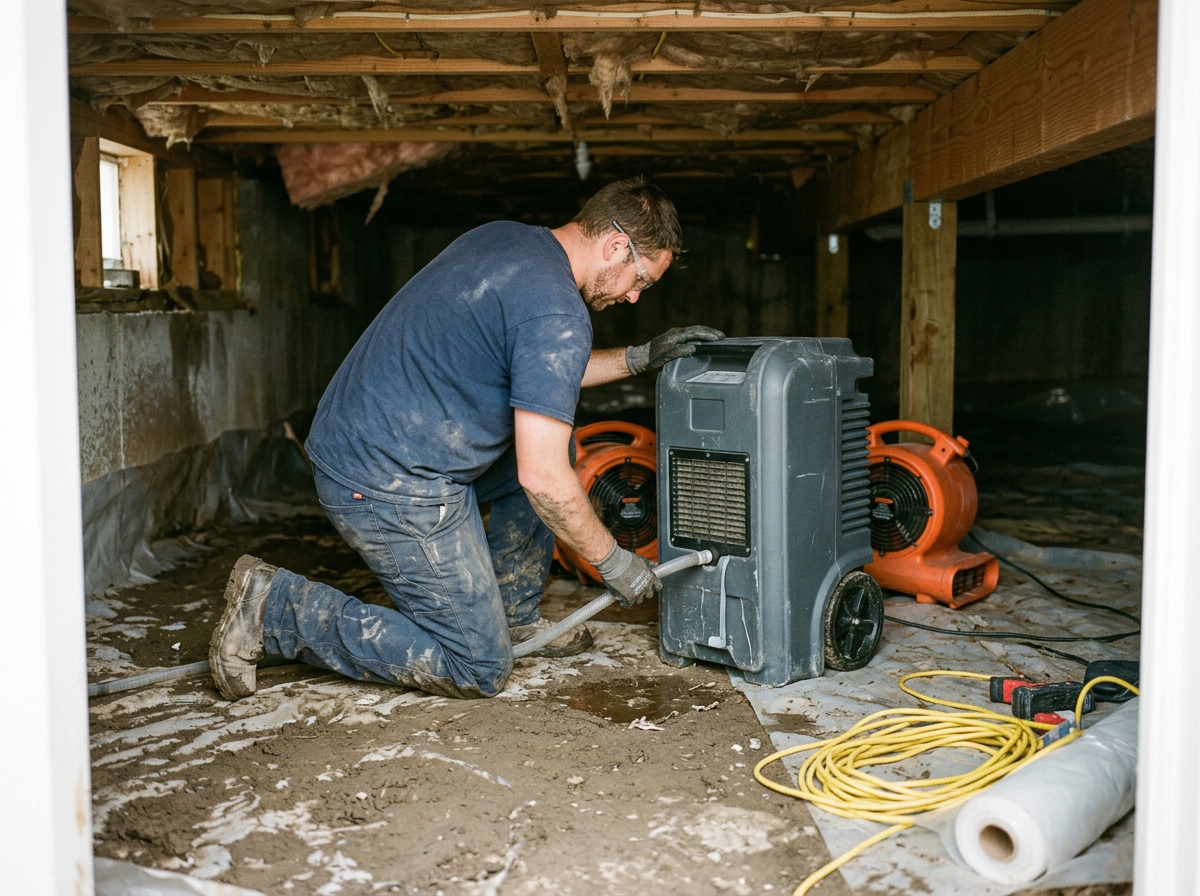
Notus is a small farming community where homes sit on wells and septic rather than city water or pressurized irrigation lines. Most properties date to earlier agricultural eras and use crawl spaces or pier foundations instead of slabs. Restoration crews must adapt extraction methods to avoid contaminating nearby wells and septic drain fields when water pools under the structure. The drive from Boise often runs 45 to 60 minutes, so teams plan equipment loads accordingly before leaving the shop.
Winter freezes hit older pipe runs in homes that can stand empty for weeks during slower farm seasons. Without modern vapor barriers or sealed crawl spaces, even modest leaks can spread moisture into framing and insulation. Crews focus on thorough drying and inspection of these older assemblies, watching for signs of prior agricultural runoff or poor lot grading that directs water toward foundations.
Access on narrow rural roads and long gravel driveways adds time to every job. Technicians carry extra containment and dehumidification capacity because return trips are not quick. Work centers on protecting the septic system during pumping and ensuring no standing water remains near well heads after the job is complete.
Around Notus
We regularly work near:
- 📍Notus Elementary School
- 📍Notus High School
- 📍Notus City Hall
- 📍US Highway 95 at Notus Road
- 📍Notus Cemetery
Water Damage Restoration in Notus — Local Notes
- •Wells and septic systems require careful extraction to avoid cross-contamination during water removal.
- •Older pier-and-beam foundations lack modern insulation, so drying times run longer after pipe bursts or roof leaks.
- •Long drive times from Boise mean crews stage full equipment loads and handle most work in a single extended visit.
- •Hard winter freezes affect unoccupied homes, turning small leaks into widespread crawl-space saturation.