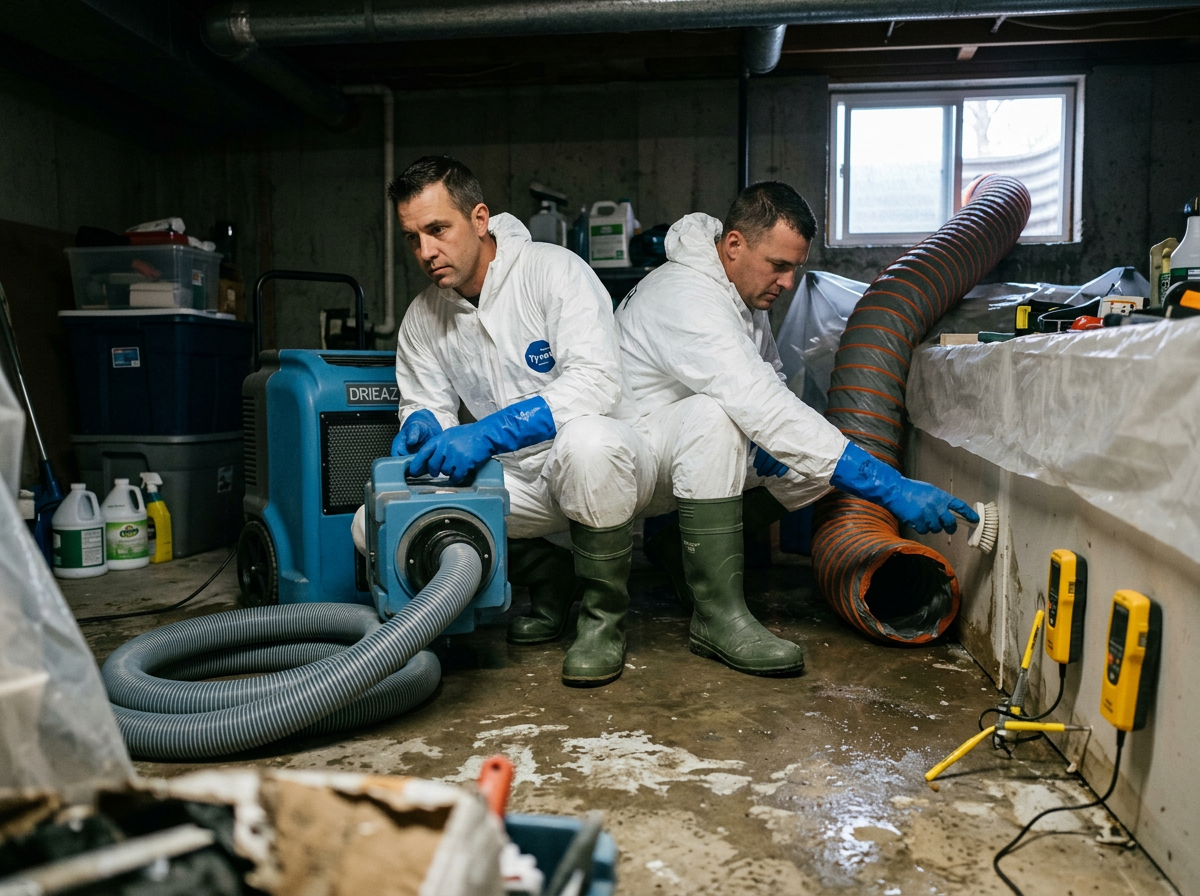
Sewage backups in the Treasure Valley fall into Category 3 water, requiring full PPE, containment and disposal protocols because the water carries pathogens from household waste or contaminated irrigation lines. When NMID or similar district pipes break between April and October, hundreds of gallons can flood under homes in Meridian or Kuna subdivisions, saturating the vapour barrier, insulation and joists from below. Low valley humidity often makes the surface feel dry while the framing stays wet, allowing mould to begin in 24 to 48 hours inside the enclosed space. Extraction must remove standing water and saturated materials before any drying equipment is placed.
Technicians begin with moisture metering at multiple joist and subfloor locations to map the full extent of saturation. Air movers and dehumidifiers are then positioned to pull moisture through the crawl space while negative air machines keep odours and particulates contained. Salvageable items are limited; fibreglass batt insulation and particleboard subfloor sections are typically removed, while solid joists may be cleaned and treated if caught early. All removed materials are bagged and disposed of according to local landfill rules for contaminated waste.
Documentation for insurance includes pre-job photos, moisture readings, a written scope of work and a post-drying verification report showing that wood moisture content has returned to acceptable levels. Homeowners in older North End bungalows with tight access often need temporary floor openings cut for equipment. Winter pipe bursts in unheated crawl spaces around Boise produce similar damage once the thaw begins, so the same Category 3 protocol applies regardless of season.
Safety warnings include avoiding direct contact with the water, keeping children and pets out of the affected area, and never running HVAC systems that could spread contaminants. The business operates 24 hours a day, seven days a week, so crews can respond the same day a homeowner notices odour or a soft floor.
Technician insight
In Boise the thing that catches most people out with sewage backup cleanup is an irrigation line break in the back easement that nobody sees until the crawl space smells; the shallow water table in subdivisions built after 1993 keeps pushing more water up even after the pipe is fixed, so you have to pull the vapour barrier and check every joist or the floor stays soft.
Meridian irrigation line break
A pressurized NMID line cracked behind a 2015 Meridian home and sent water under the vapour barrier for several days. Moisture meters showed saturated joists and insulation across half the crawl space with early mould on the soil side. Crews extracted the water, removed the insulation, treated the framing and replaced the vapour barrier before the subfloor softened further.
Sewage Backup Cleanup Services We Offer
✓Crawl Space Sewage Extraction
Removes standing Category 3 water and sludge from under Boise homes before it saturates joists and subfloor from below.
✓Contaminated Insulation Removal
Extracts and disposes of saturated fibreglass or cellulose insulation that has wicked sewage upward into floor cavities.
✓Vapour Barrier Replacement
Installs new 6-mil or thicker vapour barrier after cleaning to block future moisture and odour migration from the soil.
✓Subfloor Moisture Mapping
Uses pin and pinless meters to locate hidden wet zones in subfloor and joists that surface inspection misses.
✓Odour Neutralization Treatment
Applies EPA-registered antimicrobials and fogging agents to eliminate sewage smells trapped in wood and soil.
Sewage Backup Cleanup Cost in Boise, ID
| Service | Typical Range | What Affects It |
|---|---|---|
| Small crawl space cleanup under 400 sq ft | $1,200–$2,400 | Single irrigation break with limited insulation removal |
| Standard residential sewage backup | $2,200–$4,500 | Meridian or Kuna tract home, partial subfloor work required |
| Large or multi-area cleanup | $4,000–$7,500 | Agricultural property or older North End home with tight access |
| Additional vapour barrier and insulation | $600–$1,800 | Material and labor added when full replacement needed |
Ranges are typical for Boise, ID and confirmed with an exact written quote before any work starts.
How it works
- 1
Site Assessment and Containment
Technicians inspect the crawl space, identify the water source, set up containment barriers and document moisture levels.
- 2
Water and Sludge Extraction
Pumps and wet vacuums remove standing sewage while waste is hauled for proper disposal.
- 3
Material Removal and Cleaning
Saturated insulation and affected subfloor sections are cut out, surfaces are scrubbed and treated with antimicrobial solution.
- 4
Drying and Verification
Equipment dries the space to target moisture content, followed by final meter readings and report for insurance.
Pricing
Pricing depends on square footage affected, depth of contamination and access difficulty; free on-site estimates provided.