2026-09-03 · Rick Calder
Frozen Pipe Burst in a Boise Crawl Space: What Happens Next
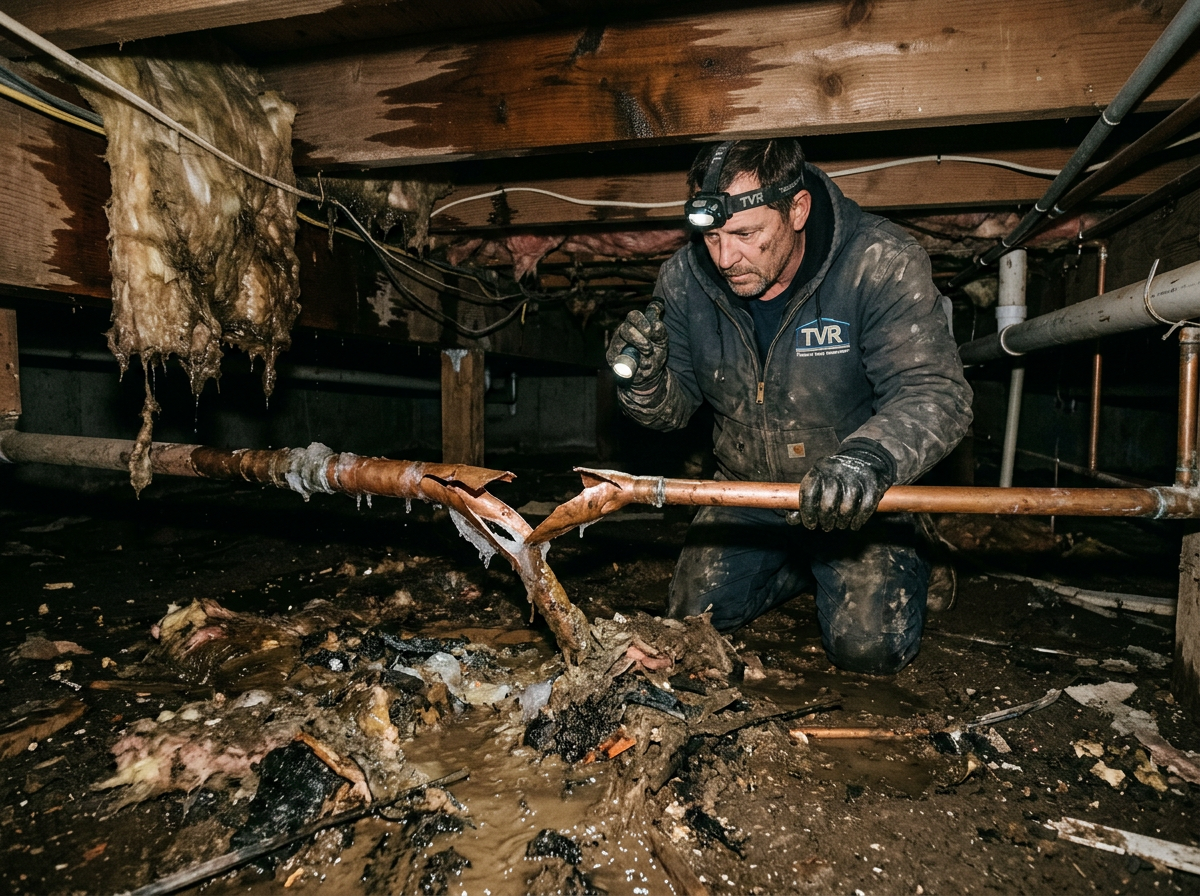
When a pipe freezes and bursts in a Boise crawl space, act within the first 24 hours to extract standing water and begin drying before mold forms. Expect 50-200 gallons to be removed depending on the break size, followed by 3-7 days of dehumidification to reach under 50% humidity in the enclosed space.
Immediate Actions After Finding Water
Turn off the main water supply at the street or interior shutoff to stop additional flow from the broken line. Avoid entering the crawl space if water depth exceeds a few inches or if electrical outlets are submerged. Document visible moisture with photos from the access point, noting any insulation that has become saturated along floor joists. In Boise's post-1993 subdivisions, check whether nearby pressurized irrigation lines could be contributing if the thaw coincides with the April-to-October season. Keep family members and pets away from the area until extraction equipment is in place.
Water Removal From the Crawl Space
Standing water in a crawl space requires specialized pumps and vacuums sized for confined areas rather than standard shop vacs. A typical residential burst can produce enough volume to require 4-8 hours of continuous extraction before the surface appears dry. Residual moisture trapped in soil or under vapor barriers must still be addressed because the Treasure Valley's 2,700-foot elevation and low humidity can mask damp pockets in framing. Crawl space water extraction crews bring moisture meters that read hidden levels behind insulation and subflooring. Once bulk water is gone, temporary barriers prevent cross-contamination into living areas above.
Drying Process and Timeline
Semi-arid Boise air accelerates surface drying yet leaves moisture in joists and rim boards that can persist for days. Industrial air movers and dehumidifiers are positioned to pull humidity down to 40-45% over 3-5 days of continuous operation. Homeowners can expect daily visits to check readings because a single missed pocket above 60% can restart the 24-48 hour mold clock inside the enclosed space. Structural drying and dehumidification equipment is calibrated for crawl space volumes so that wood moisture content returns below 15% before insulation is replaced. Running household fans alone rarely achieves these targets in the confined volume.
Mold Prevention in the First 48 Hours
Mold spores present in every crawl space begin colonizing once materials stay wet longer than 24-48 hours. In Idaho's dry climate the risk is often underestimated because exterior air feels arid while the enclosed crawl remains humid. Remove and dispose of wet insulation within the first day, then treat exposed wood with an antimicrobial solution approved for crawl spaces. How fast mold starts after water damage in Idaho's dry air explains why unoccupied mountain cabins are especially vulnerable when a freeze-thaw cycle occurs while no one is present to notice. Regular moisture checks every 12 hours during the initial drying window keep the timeline under control.
Professional Restoration and Cost Factors
Most frozen pipe incidents in Boise crawl spaces fall into the $1,200-$3,500 range once extraction, drying, and minor insulation replacement are included. Factors that raise the total include access difficulty, amount of insulation to remove, and whether the break occurred on an irrigation line versus domestic supply. Frozen pipe burst cleanup teams coordinate with plumbers so the pipe is repaired before final drying equipment is removed. Homeowners who obtain itemized quotes before work begins avoid surprises and can verify that only necessary steps are performed. What water damage restoration costs in the Treasure Valley provides additional local benchmarks for similar jobs.
Once drying readings confirm safe levels, replace insulation, restore access, and schedule a follow-up inspection in 30 days to confirm no hidden moisture remains.